
Individual Therapy
A culturally affirming, trauma-informed space for individuals navigating anxiety, depression, past trauma, or cross-cultural identity struggles.
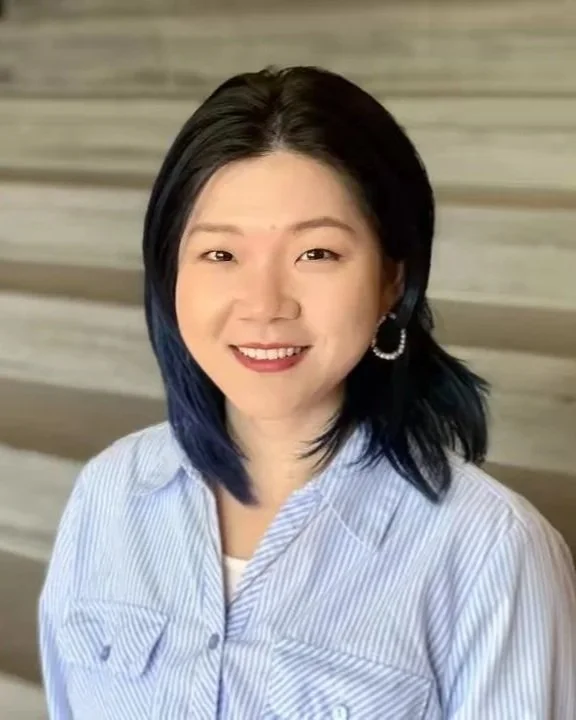
My Experience
Whether you are navigating emotional distress, existential confusion, or healing from deep-rooted family of origin and childhood trauma, individual therapy offers a safe, non-judgmental holding environment. It is intentionally designed for navigating anxiety, depression, acculturative stress, and relationship concerns.
Through my clinical work at the University of Michigan CAPS and non-profit organizations, I have provided individual psychotherapy to college students, international students, young professionals, 1st-2nd generation immigrants, and extensively supported survivors of gender-based violence. As a former international student and immigrant myself, I intimately understand the identity fragmentation and survival anxiety you may face. You will never have to "translate" your cultural background in our sessions.
What does a typical therapy session look like?
Many people think therapy is just lying on a couch venting, or waiting for a therapist to dispense "life advice." At OverStream Therapy, this is not the case. Our 53-minute sessions are collaborative, egalitarian conversations. Utilizing a trauma-informed framework, we start by listening to your current distress. I won't lecture you; instead, I will act as your ally, exploring together how your past experiences influence your current beliefs. We will identify emotional blind spots, practice setting boundaries, and equip you with practical emotional regulation tools to use in your daily life.
You Are Welcome Here
❁
You Are Welcome Here ❁
15min free consultation
We will use the brief consultation to get to know each other and see if we might be a good fit for each other.

You Are Welcome Here
❁
You Are Welcome Here ❁
How therapy works

Upon booking, we will begin with a 53-minute comprehensive intake session to safely unpack your lived experiences and outline your goals. We will then meet for 53-minute sessions on a weekly basis or based on your preference. Utilizing trauma-informed and person-centered approaches, I integrate evidence-based modalities to process your pain without retraumatization.
Potential Risks of Therapy: Healing is rarely a linear or entirely comfortable process. As we explore your inner landscape, you may experience uncomfortable emotions such as sadness, guilt, anxiety, or anger, and recall unpleasant memories. Additionally, making changes in your behaviors or setting new, healthy boundaries may lead to temporary disruptions or friction in your current relationships. These are natural, expected parts of the therapeutic journey, and we will navigate them together in a secure environment.
My hope is that after our work together, you will gain deeper self-awareness, develop effective emotional regulation tools, untangle limiting beliefs, and reclaim your authentic voice to live a more empowered and intentional life.
Insurance & Payment

I am an in-network provider for BCBS PPO and USHIP. Your exact out-of-pocket costs (such as deductibles, copays, or coinsurance) will depend on your specific insurance policy.
If you are using insurance, please do not schedule multiple therapy sessions on the same day (e.g., attending both an individual session and a couples/family/group session on the same date), as insurance companies will likely deny the claims.
For clients with all other insurance plans, I am considered an Out-of-Network (OON) provider. This means you are responsible for paying the full session fee at the time of service. I will then provide you with a Superbill (an itemized medical receipt). You can submit this Superbill to your insurance company. If your plan includes out-of-network benefits, your insurance company will reimburse you directly for a portion of the cost based on your policy.
I strongly recommend contacting your insurance provider prior to our first session to verify your out-of-network mental health benefits. You can ask them about your coverage and reimbursement rates for the following specific service codes (CPT Codes):
90791: Psychiatric Diagnostic Evaluation — $225
90837: Individual Psychotherapy — $200
Here’s what I can help
-

Mood & Nervous System
Generalized Anxiety & Panic Attacks
Depression & Loss of Motivation
Chronic Stress & Nervous System Dysregulation
Emotional Dysregulation & Anger Management
Overthinking & Mental Exhaustion
-

Relationships & Boundaries
People-Pleasing & Boundary Setting
Communication Breakdown & Constant Conflict
Infidelity & Rebuilding Trust
Attachment Wounds: Anxious & Avoidant Patterns
Toxic Relationships & Emotional Abuse Recovery
Loneliness & Difficulty Building Intimacy
-

Sex, Body & Identity
Desire Discrepancies & Sexless Marriages
Sexual Dysfunction & Arousal/Orgasm Difficulties
LGBTQIA+ Identity Exploration & Affirming Care
Eating Disorders & Binge/Restrict Cycles
Body Dysmorphia & Body Image Struggles
Sexual Shame & Somatic Dissociation
-
Trauma & The Past
Childhood Trauma & Emotional Neglect
Family of Origin & Intergenerational Trauma
Complex PTSD / C-PTSD
Sexual Assault & Gender-Based Violence Survivor Support
Religious Trauma & Faith Deconstruction
-
Multicultural & Existential Crises
Acculturative Stress & Culture Shock
1st/2nd Gen Immigrant Identity Conflict
Existential Crisis & Searching for Meaning
Grief, Loss & Life Transitions
Academic, Career & Personal Growth
Imposter Syndrome / Feeling like a fraud
-
Academic, Career & Personal Growth
Imposter Syndrome / Feeling like a fraud
Academic & Workplace Burnout
Perfectionism & Procrastination
Visa Anxiety / OPT & H1B Stress
Decision Paralysis during Life Transitions
“Perhaps all the dragons in our lives are princesses who are only waiting to see us act, just once, with beauty and courage.
Perhaps everything that frightens us is, in its deepest essence, something helpless that wants our love.”
― Rainer Maria Rilke, Letters to a Young Poet
My Therapeutic Approach
Strength-Based
In traditional medical models, psychotherapy often defaults to a pathology-focused lens—searching for what is "broken" and needs "fixing." However, as a former international student and first-generation immigrant, I intimately understand the immense internal resources required to survive, adapt to cross-cultural shock, and rebuild a life in a new landscape. Through a Strength-Based approach, we refrain from viewing anxiety, depression, or defense mechanisms merely as "symptoms." Instead, we reframe them as profound "survival strategies" you developed to navigate challenging environments. In our work together, I will help you sift through what you might consider "emotional baggage" to unearth your hidden resilience and vitality. Whether you are a young professional navigating visa anxieties or an international student battling academic burnout, we will leverage your multicultural background, your survival intuition, and your history of overcoming systemic barriers as your greatest assets. I firmly believe that you already possess the inherent potential for healing and self-actualization. My role is to hold a clear mirror to the strengths you have overlooked and assist you in mapping out an actionable strategy to thrive.
Person-Centered
For many who grew up in East Asian families or authoritarian cultures, there is a deep-seated habit of being told what one "should" do and navigating relationships from a place of compliance or fear of judgment. Therefore, the Person-Centered approach forms the foundational logic of all my clinical interventions. This philosophy dictates that the therapist is not an aloof "expert" dictating your life; rather, you are the ultimate expert on your own lived experience. In our sessions, I offer a holding environment defined by unconditional positive regard, radical genuineness, and zero judgment. Integrating the philosophical training I received at Minzu University of China, I approach the complexities of the human condition with profound humility. You never have to worry that your thoughts are "too crazy," "too weak," or "politically incorrect." You don't have to perform for your therapist, nor do you need to exhaust yourself "translating" your cultural pain points. My job is to sit beside you in the dark, listening to your most authentic voice with deep empathy, allowing you to experience the healing power of being fully accepted in a safe relational space, and ultimately empowering you to reclaim authorship of your own narrative.
Integrating Spirituality & Existential Exploration
When confronting major life transitions, profound loss, or the uprooting of cultural foundations, what we experience is often not just a set of psychological symptoms, but a deep existential crisis—"Who am I?" "Why am I here?" "Does my suffering have meaning?" My academic roots in Philosophy and Religious Studies from Minzu University of China, intertwined with my personal faith journey, have equipped me with the immense capacity to sit with clients as they confront these monumental and heavy life questions. For many Asians and immigrants, spirituality, religious beliefs, or a sense of cosmic connection serve as vital coping resources, yet they are frequently marginalized in Western secular psychology. Whether you are a devout believer, someone navigating the painful deconstruction of faith and religious trauma, or a seeker searching for meaning in a secular world, I welcome you to bring this dimension of yourself into the therapy room. Having independently designed and facilitated the "Connecting with Self in Spirituality" group at the University of Michigan, I deeply understand how to integrate your spiritual framework with modern psychological interventions in a non-pathologizing space. Together, we will help you find a grounding anchor amidst the chaos and achieve a profound integration of the soul.
Intersectionality
Human suffering is rarely unidimensional; it is intricately woven from our race, gender, sexual orientation, class, and immigration status. In mainstream psychological frameworks, the struggles of BIPOC, LGBTQ+, or immigrant communities are often pathologized as individual shortcomings, ignoring the crushing weight of systemic oppression. Informed by my clinical work in community agencies (such as KAN-WIN for Asian survivors) and university counseling centers, my practice is deeply anchored in Intersectionality. I do not simply see an "anxious client." I see a dynamic individual who may be simultaneously carrying the model minority myth, navigating the precariousness of visa statuses (OPT/H1B), and tearing at the seams between traditional family expectations and their authentic identity (such as LGBTQ+ exploration). In my therapy room, we discuss not only your internal emotional landscape but also how patriarchy, white supremacy, heteronormativity, and immigration policies leave physiological imprints on your nervous system. By dismantling the internalized shame imposed by these systemic forces, we locate the true root of your distress, ensuring you no longer blame yourself for systemic injustices.
Trauma-informed
"Trauma" is not limited to war, natural disasters, or severe physical violence; chronic emotional neglect in childhood, emotional blackmail from families of origin, covert sexual harassment, or daily microaggressions can leave equally profound traumatic imprints on our nervous system. As a therapist holding a Trauma-Informed Care Certificate and a frontline clinician working with survivors of gender-based violence, my therapeutic lens never asks, "What is wrong with you?" Instead, I gently explore, "What happened to you?". Trauma-informed care means that establishing a sense of "safety" is our paramount priority. When processing complex trauma responses (such as dissociation, flashbacks, panic attacks, or extreme avoidance), I will never force you to prematurely rip open wounds, ensuring we prevent retraumatization. Integrating my ongoing training in somatic interventions, we will begin by regulating your nervous system, teaching your brain and body to safely reconnect. At a pace dictated entirely by you, we will incrementally untangle how past traumas constrain your current intimate relationships, psychosexual health, and self-worth, guiding you toward recovery while keeping you firmly in the driver's seat.
Interpersonal Processing
"We are wounded in relationships, and we must heal in relationships." The Interpersonal Processing approach posits that the relational patterns you enact in the real world with family, partners, and colleagues—your attachment styles, communication barriers, and fears of rejection—will inevitably play out in the therapy room, within the relationship between "you and me." My master's background in Health Communication from Indiana University has made me acutely sensitive to the micro-dynamics of language, narratives, and unspoken messages. Furthermore, my extensive experience facilitating over 20 psychotherapy groups has given me a profound understanding of how human beings construct defensive walls and how they learn to safely dismantle them. In our individual or couples sessions, we don't just talk about "there and then" (the past); we place a hyper-focus on the "here and now." I will gently yet directly invite you to observe our real-time interactions: What is your response when you feel misunderstood by me? Are you habitually people-pleasing in our sessions? How does this mirror your real-world patterns? By utilizing our secure and authentic therapeutic relationship as a microcosm—a "relationship laboratory"—you will have the opportunity to break destructive historical cycles, practice expressing genuine vulnerability, and ultimately transfer these healthy, boundary-setting communication skills into your broader life.

“You are like a beanbag filled with water—soft, comfortable, safe, and adapts to my shape. ”
from one of my former clients